116 Residential Units in Vénissieux

  • Fragmented mid-rise volumes of the 116 Residential Units in Vénissieux, with stacked balconies and light façades rising above a landscaped green foreground.
  • Street view of Tectoniques’ 116-unit housing in Vénissieux, showing fragmented white and timber façades with metal balconies along a planted sidewalk.
  • Covered circulation space in the 116 Residential Units, Vénissieux, with concrete frame, translucent polycarbonate façade, bike racks and a pale green service module.
  • Loggia of the 116 Residential Units in Vénissieux, with metal exoskeleton, vertical slatted screen and sliding glazed façade overlooking the district.
  • 116 Residential Units in Vénissieux, showing fragmented concrete and timber façades with projecting metal balconies opening onto a landscaped garden axis.
  • 116 Residential Units in Vénissieux, timber-clad hybrid volume rising above trees, with recessed balconies overlooking a foreground sports field.
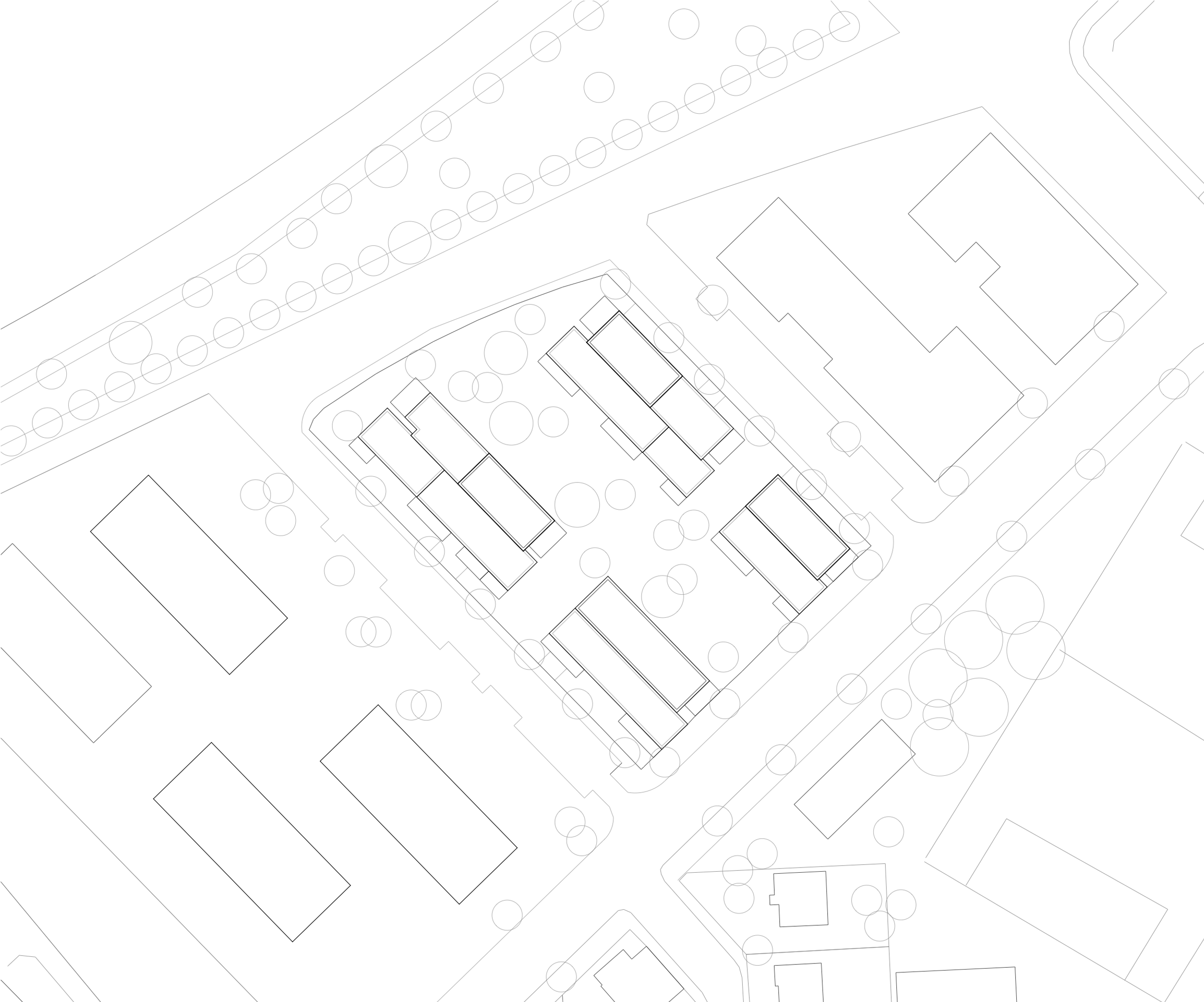
  • Site plan of the 116 Residential Units project in Vénissieux, showing a fragmented composition of elongated building volumes arranged around the perimeter of a central plot, with offset bars creating breaks in the massing and multiple passageways. The drawing highlights the landscaped context of the Grand Parilly district, with a dense pattern of trees along the main axis and scattered within the plot, and the surrounding urban fabric of adjacent building footprints and streets. The plan underlines the porous layout of the housing blocks, the orientation of the volumes, and the generous open-ground areas reserved for vegetation and outdoor spaces.
    Site plan
    N
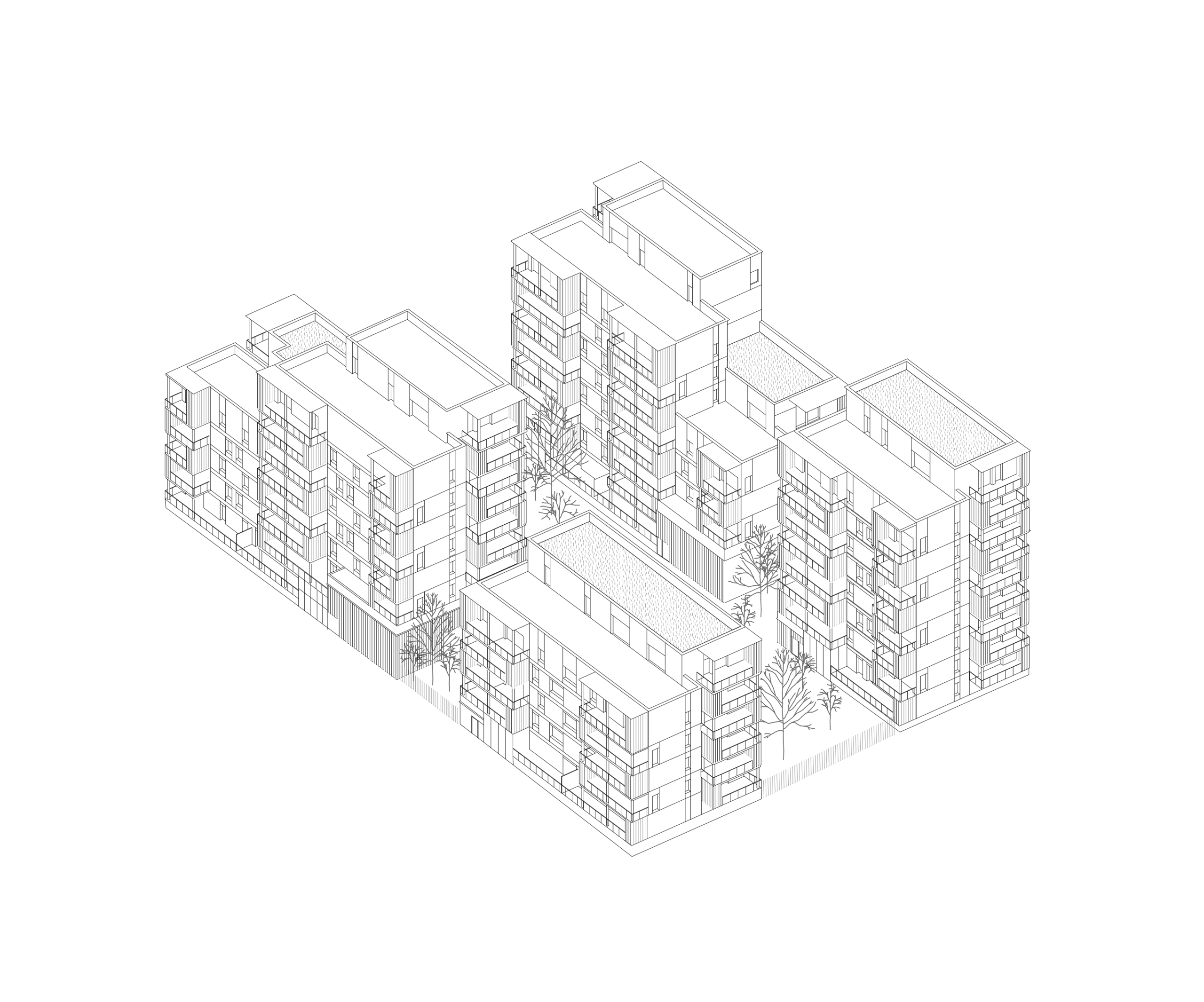
  • Axonometric drawing of the 116 Residential Units in Vénissieux, showing fragmented blocks, dual-aspect units, balconies and planted open courtyards.
    Axonometric view
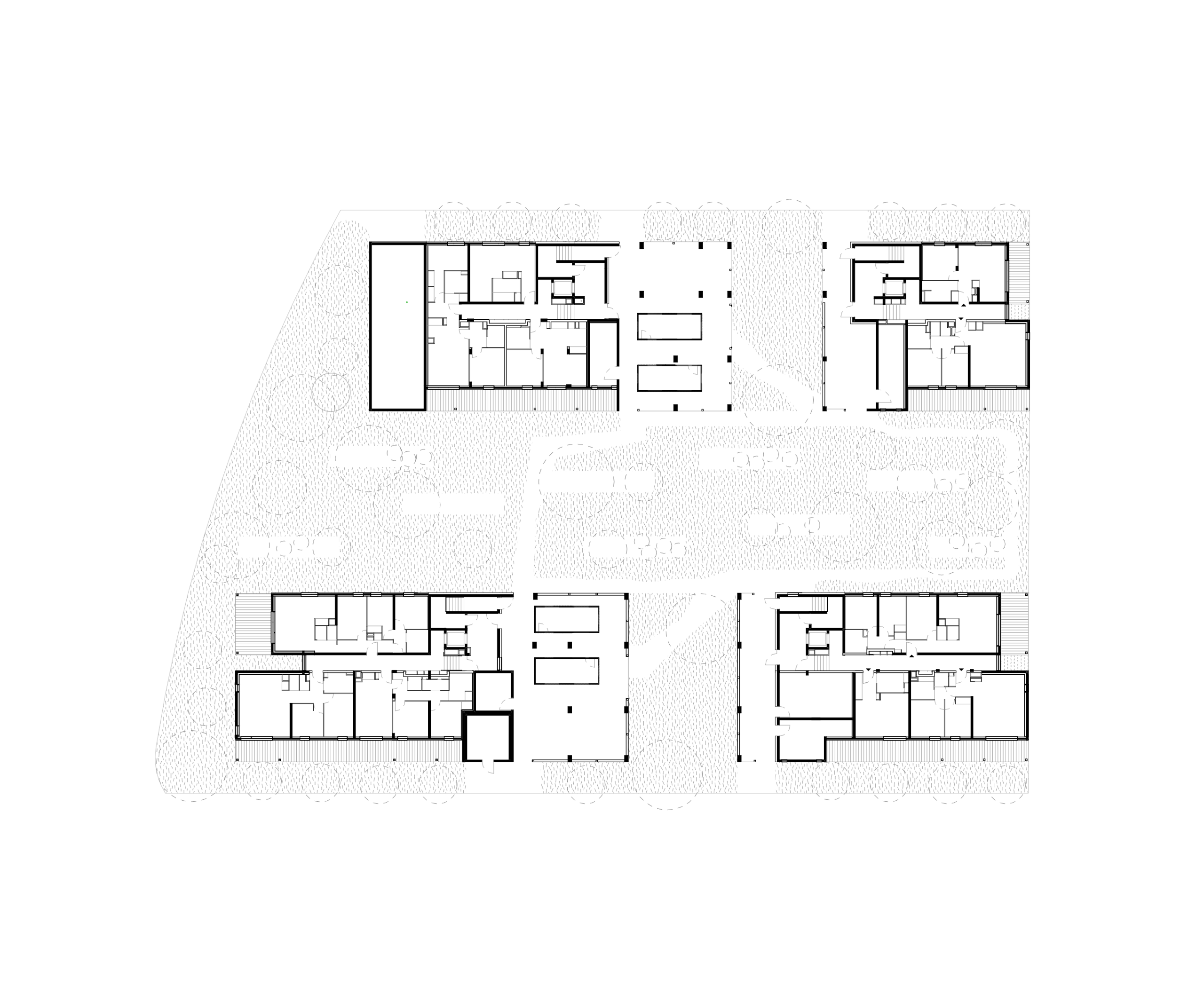
  • Site plan of the 116 Residential Units in Vénissieux, showing a fragmented composition of four elongated building bars arranged around a central landscaped axis. The black linework outlines dual-aspect apartment layouts with regular structural grids, stair and lift cores, and naturally lit circulation corridors. Lightly hatched zones indicate balconies and external walkways supported by a metal exoskeleton, while shaded strips mark the timber-frame façades along the perimeter. The interstitial spaces are drawn as open ground with trees, planted areas and pedestrian paths, illustrating the porous ground floor and the relationship between the hybrid concrete–timber buildings and the shared outdoor spaces.
    ground floor plan
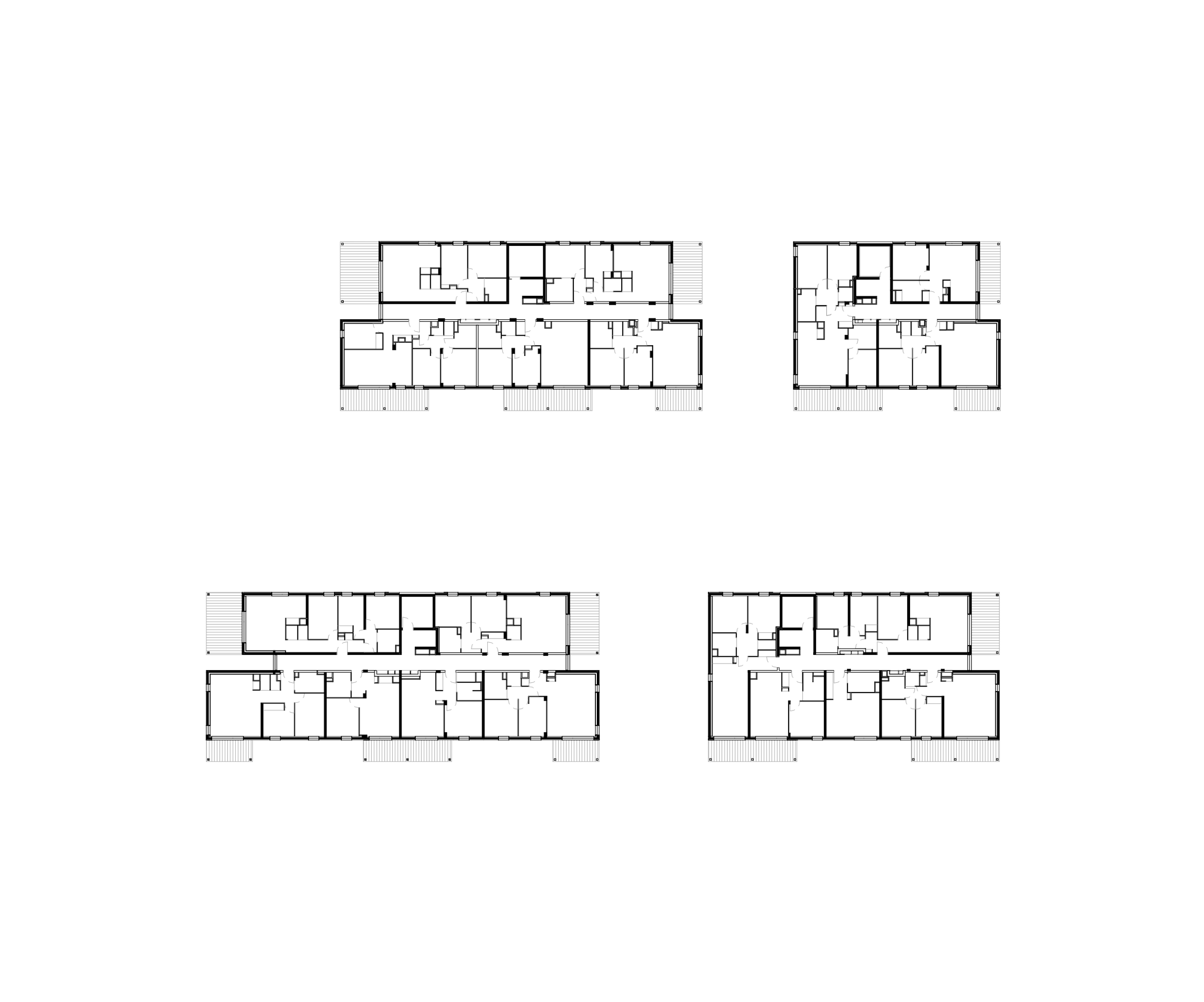
  • Black-and-white floor plan sheet for the 116 Residential Units in Vénissieux, showing four fragmented building bars arranged in a loose grid. Each bar is drawn as a narrow rectangle with a central double-loaded corridor serving a sequence of compact apartments, many configured as through-apartments with rooms on both façades. Stair and lift cores punctuate the circulation, while private balconies or loggias are indicated as hatched rectangles at the short ends and along selected long façades, expressing the metal exoskeleton for the outdoor spaces. Wet rooms and service zones are grouped around the corridor, and living areas are oriented toward the landscaped exterior, illustrating the project’s hybrid construction logic and fragmented volumetry.
    typical floor plan
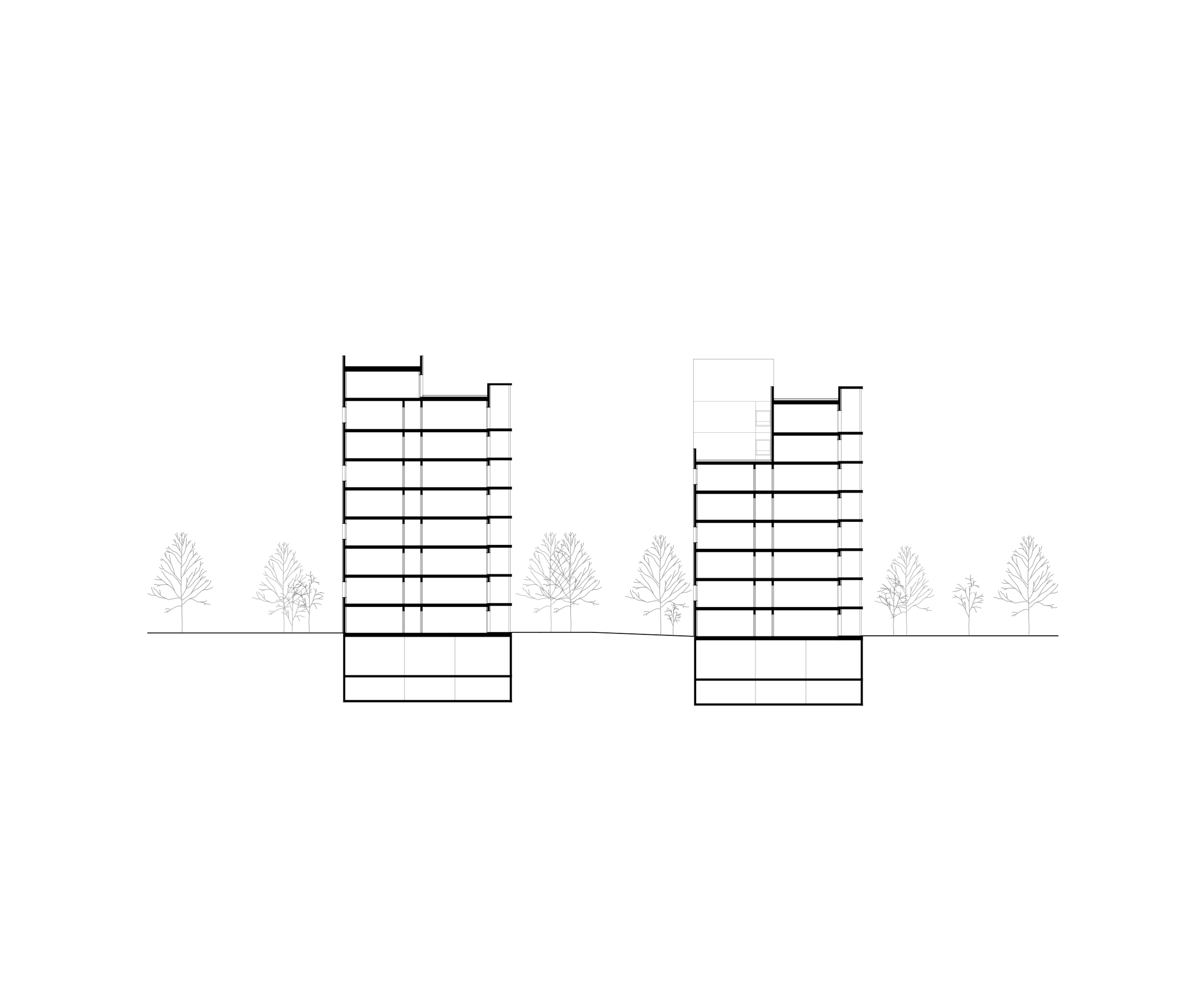
  • Section drawing of the 116 Residential Units in Vénissieux, showing two staggered towers with regular floor slabs above a base, on a landscaped site with trees.
    transverse section
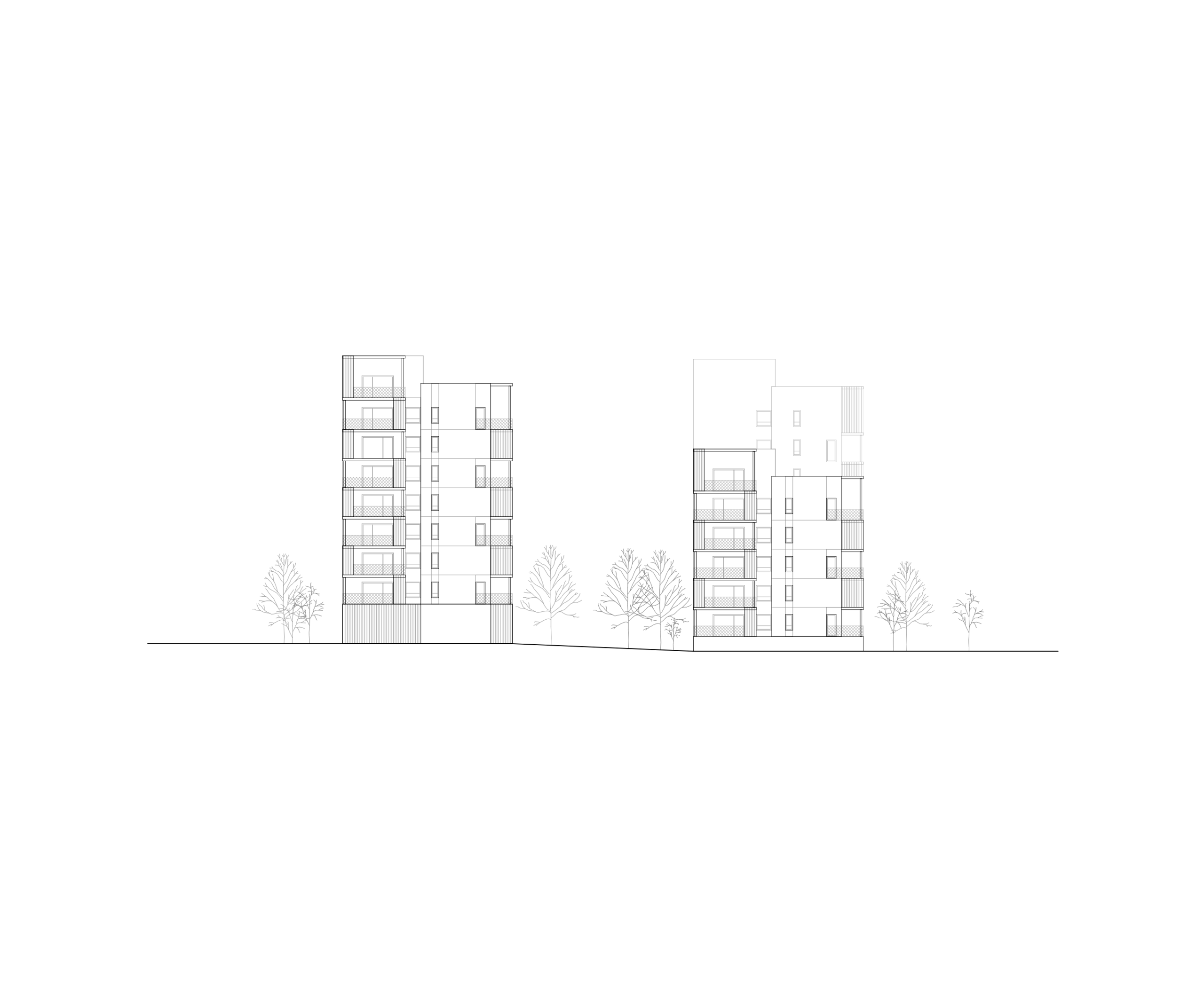
  • Technical elevation of the 116 Residential Units in Vénissieux, showing two fragmented mid-rise volumes with stacked balconies and a regular window grid.
    south, interior courtyard elevation
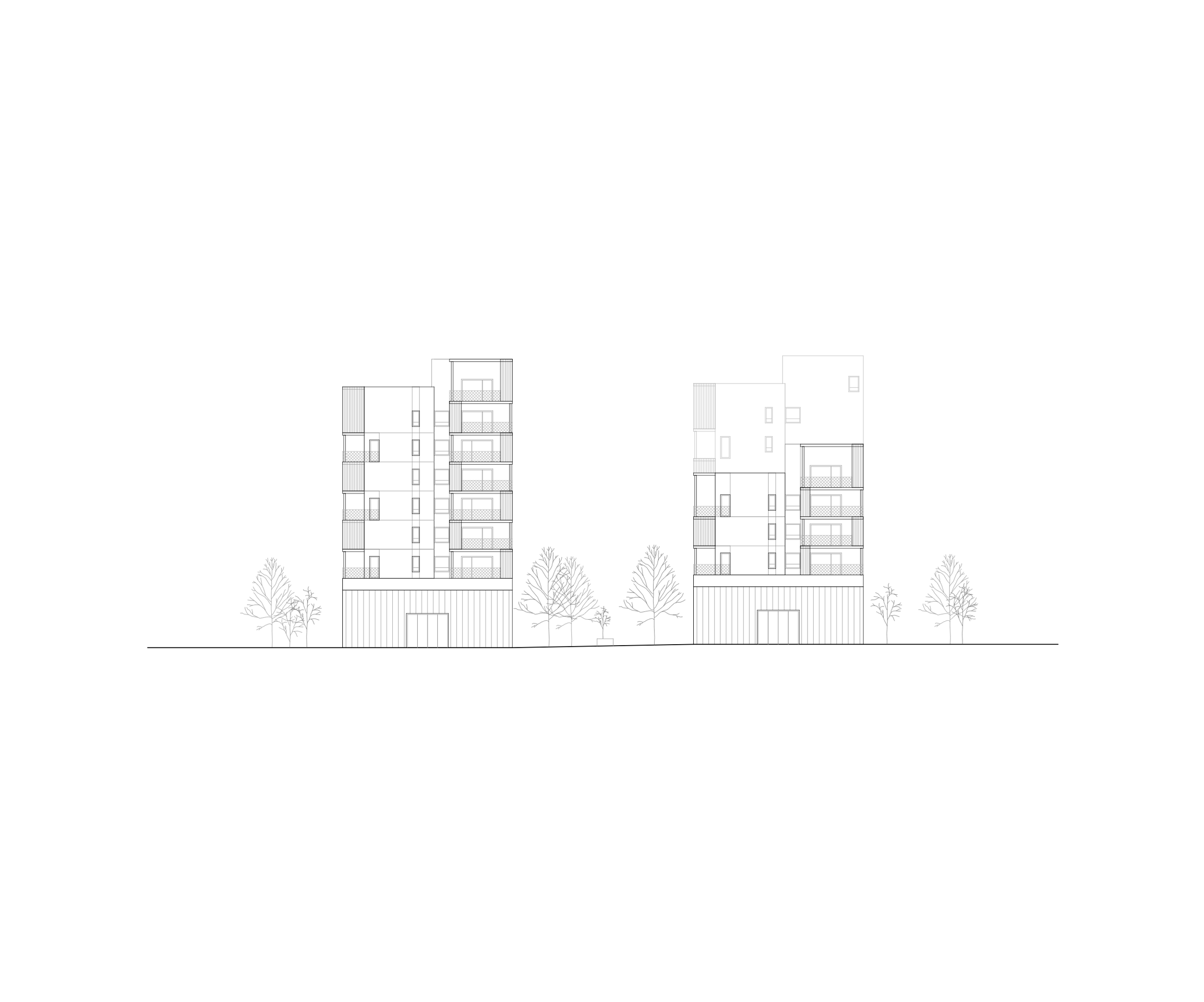
  • Elevational drawing of the fragmented 116-unit residential complex in Vénissieux, showing two hybrid-structure volumes with stacked balconies and ground-floor base.
    south elevation
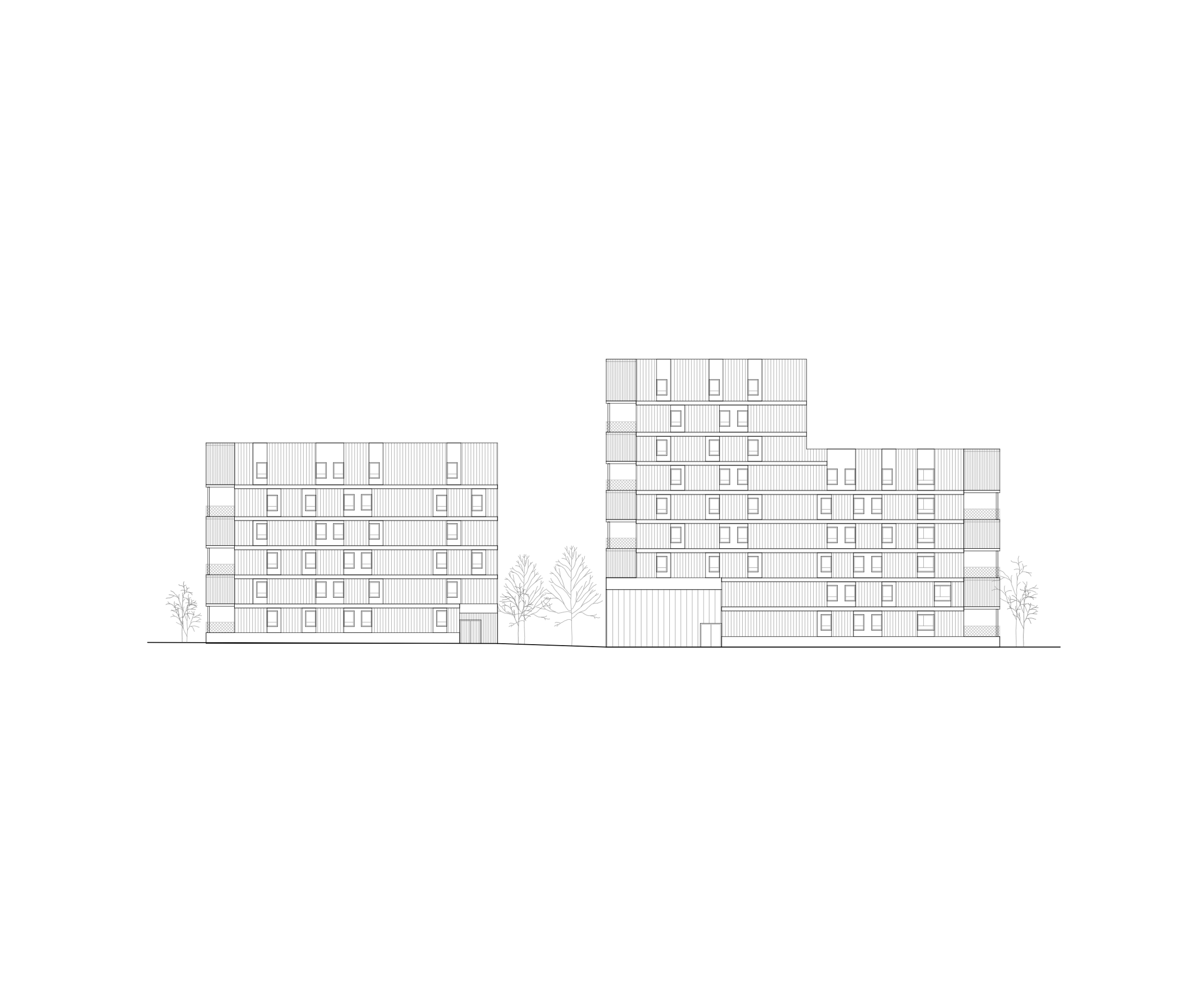
  • Technical elevation of the 116 Residential Units in Vénissieux, showing two fragmented volumes with stacked bands of openings and regular balcony grids.
    west elevation

Project description

Located in the dense Grand Parilly district, structured by a landscaped axis, the project adopts a fragmented volumetry that refines the building blocks and creates a varied skyline. This layout promotes through-apartments or dual-aspect units, served by naturally lit circulation areas. The outdoor spaces preserve extensive areas of open ground and vegetation. Large double-height entrance halls accommodate flexible shared spaces. The efficient hybrid construction system combines concrete floor slabs, timber-frame façades and metal exoskeletons for the balconies, in a restrained material palette.

Download the press kit (.pdf)

Project details

  • Address
    16 boulevard Marcel Sembat, Vénissieux, Rhône
  • Dates
    2020-2024
  • Programme
    116 apartments, 106 parking spaces
  • Surface area
    7,900 m2
  • Budget
    11 M€
  • Regulatory framework
    RT 2012 – 30 %
  • Carbon emissions
    950 kgCO2eq/m2
  • Energy consumption
    49.7 kWh/m2/year
  • Labels
    E3C1, NF HQE Habitat
  • Notable details
    Concrete frame and FOB prefabrication, extensive common halls, full-ground gardens
  • Selected media

Credits

  • Client
    ICADE
  • Lead architect
    Tectoniques (architect)
  • Project management
    BBC & associés (architect), Cetis (timber structure, concrete structure), Prelem (MEP engineering), Iliade Ingé (cost consultant), In Situ (roads and utilities), C+POS (sustainability consultant), BDP concept (landscape architect), Equaterre (geotechnical engineer), Cabinet Laurent (land surveyor)
  • Photography
    Maxime Verret